
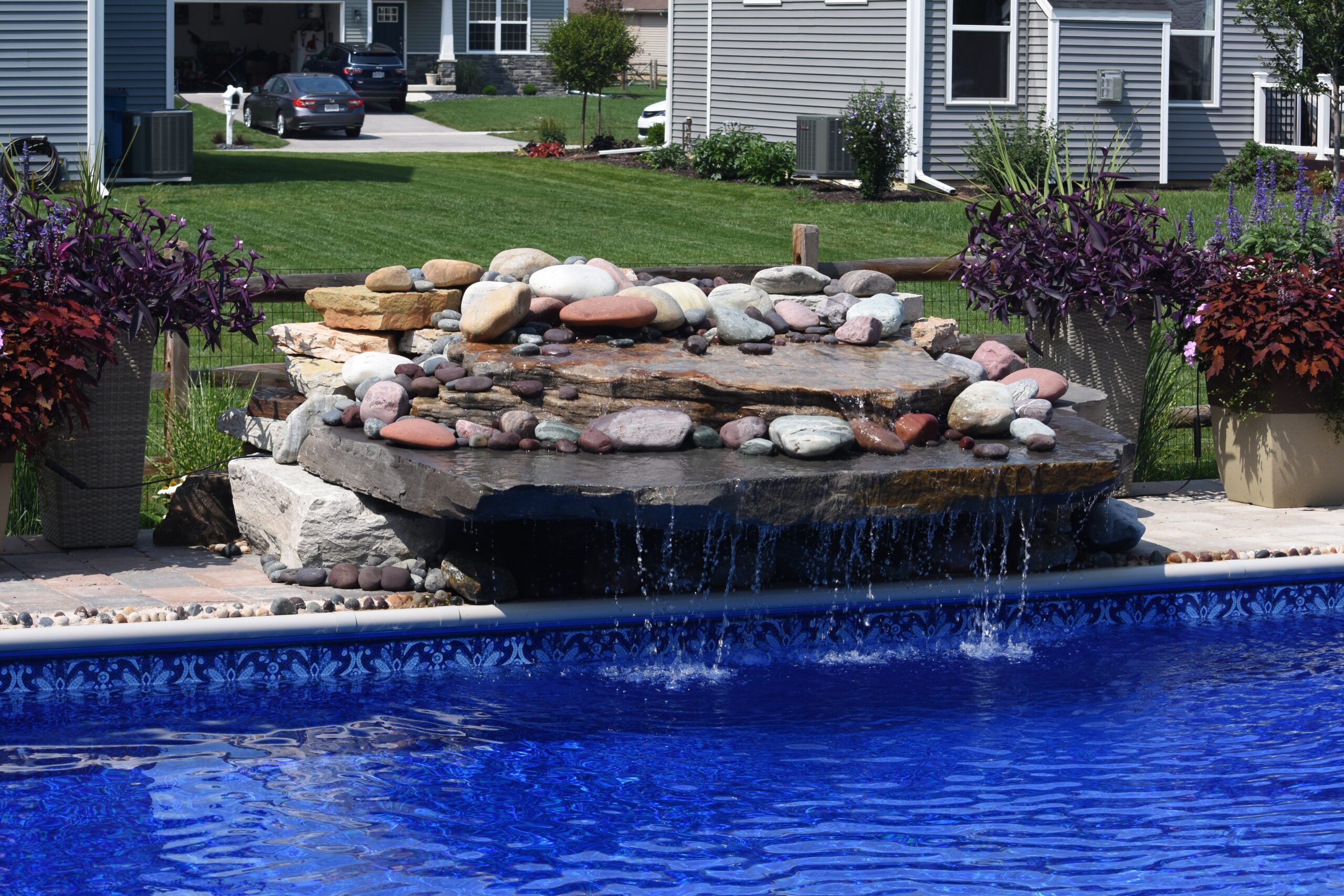
There is a moment in every well designed landscape where the space feels complete. The patio is in. The plantings are established. The lighting works. But something is missing, and it is not visual. It is sensory. The yard looks great. It does not sound like anything. It does not move. It does not draw you toward a specific point the way a fire or a body of water does.
That is the gap custom water features fill. A waterfall, a koi pond, a stream, or a fountain introduces sound, motion, and a living ecosystem into the landscape. It creates a focal point that changes with the light, the season, and the time of day. And it adds a quality to the outdoor space that static materials, no matter how beautiful, cannot replicate.
Why Water Changes the Experience
A patio is a surface. A planting bed is a border. A retaining wall is a structure. All of them serve the landscape, but none of them create the kind of sensory experience that custom water features provide. The sound of water moving over stone is calming in a way that is difficult to engineer with any other material. It masks ambient noise from roads, neighbors, and equipment. It draws attention inward, toward the landscape itself, rather than outward toward whatever is beyond it.
In Northwest Ohio, where residential lots often sit close together and road noise is a factor in many neighborhoods, that acoustic effect is more valuable than most homeowners expect. A water feature does not just look good in the yard. It changes how the yard feels to be in.
What to Think About Before You Build
Not every water feature is the same, and the right one depends on how you want to use the space, how much involvement you want in maintaining it, and how the feature connects to the rest of the landscape. A few things worth considering:
- A koi pond creates a living ecosystem that becomes a focal point of the property, but it requires an understanding of filtration, aeration, water chemistry, and seasonal fish care
- A pondless waterfall provides the sound and visual movement of falling water without the open body of water, making it a lower maintenance option for properties where simplicity is the priority
- A natural stream or creek bed can be designed to recirculate water through the landscape, creating the effect of a flowing waterway without relying on a natural water source
- A fountain or bubbling rock provides a compact, architectural element that works well in smaller spaces, courtyards, or entryways where a larger feature would overwhelm the area
Each option has different construction requirements, different maintenance needs, and a different relationship to the surrounding hardscape and plantings. The best results come from designing the water feature as part of the larger landscape plan, not adding it after everything else is built.
The Landscape Comes Alive
Custom water features bring something to the property that nothing else can. They add life, literally and figuratively.
Fish, plants, beneficial bacteria, and the water itself create a small ecosystem that evolves with the seasons and rewards attention. The landscape stops being a static arrangement of materials and starts being a living environment.
Let’s talk through what works for your space and how to bring it to life.
 Pursu Agency