
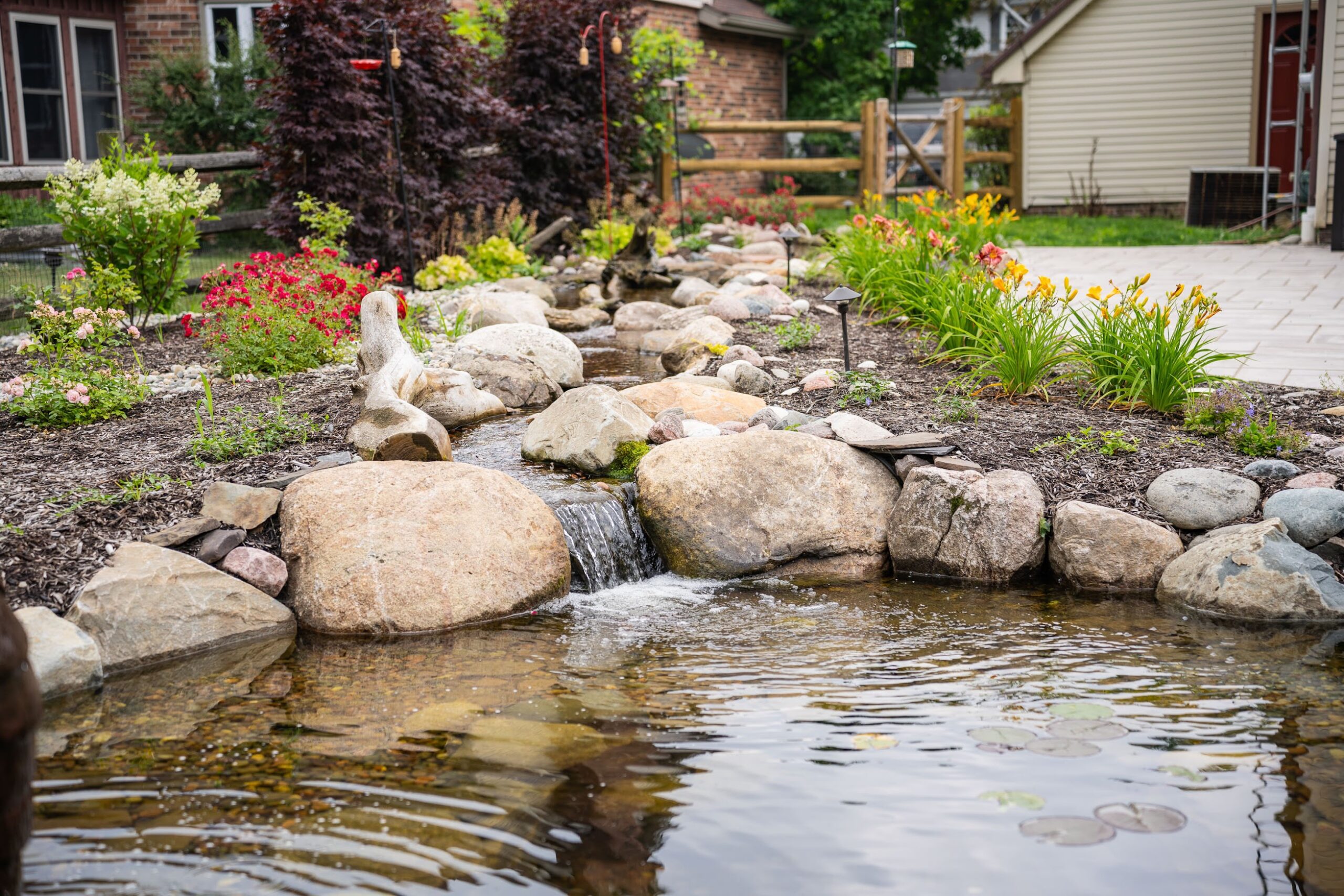
 A koi pond is not a water feature with fish in it. It is an ecosystem. The water, the filtration, the plants, the bacteria, and the fish all depend on each other to maintain the biological balance that keeps the system healthy. When that balance is right, the pond is clear, the fish are vibrant, and the maintenance is minimal. When it is wrong, the water turns green, the fish stress, and the homeowner spends more time managing problems than enjoying the pond.
Koi pond builders who understand the biology design the system around the needs of the fish and the ecosystem, not around the look alone. The aesthetic matters. But it follows from the engineering, not the other way around.
What Koi Pond Builders Need to Get Right
Koi are hardy fish, but they are not tolerant of poor water conditions. They produce significant waste relative to their size. They need oxygen rich water. They need stable temperatures. And they need enough space to grow, because a healthy koi can reach 24 inches or more and live for decades.
A koi pond designed for long term success requires:
- Depth of at least 3 feet, with a deeper zone of 4 to 5 feet in regions that experience winter freezing, so the fish have a thermal refuge below the ice line during the coldest months
- A bottom drain or multiple drains that collect waste and debris at the lowest point of the pond and route it to the filtration system, keeping the pond floor clean without constant manual intervention
- Mechanical filtration that removes solid waste from the water before it decomposes and releases ammonia
- Biological filtration that converts ammonia to nitrite and then to nitrate through beneficial bacteria colonies, completing the nitrogen cycle that keeps the water safe for the fish
- Adequate circulation to move the entire pond volume through the filtration system multiple times per day, ensuring consistent water quality throughout the pond rather than creating dead zones where waste accumulates
These are not luxury features. They are the minimum requirements for a koi pond that sustains healthy fish over years rather than months.
Why the Pond Has to Be Designed for Winter
In the Toledo area and across Northwest Ohio, the pond needs to function through winters where the surface freezes for weeks at a time. The fish do not hibernate in the traditional sense, but their metabolism slows dramatically, and they settle to the bottom of the pond where the water temperature is most stable.
A pond designed for this climate includes a depth that keeps the bottom water above freezing even when the surface is iced over, an aeration system or de icer that maintains a gas exchange opening in the ice, and a filtration approach that accounts for the reduced biological activity during cold months. The koi pond builders who have built through Ohio winters know these details. The ones who have not tend to learn them at the fish’s expense.
The Backyard That Has a Pulse
A koi pond changes the character of a property. It introduces color, movement, sound, and life in a way that hardscape and plantings alone cannot deliver. The fish become individuals. The homeowner learns their patterns. The kids name them. And the pond, over time, becomes less of a feature and more of a presence. If that sounds like something worth building, a conversation with koi pond builders who understand the biology is the first step toward a backyard that is genuinely alive.
 Pursu Agency